Biography
About Omer Bajwa
Born in Pakistan, raised in upstate New York, formed in Ithaca, Hartford and New Haven.
Photograph by Dan Renzetti, Yale University
Omer Bajwa was born in Pakistan and came to the United States at the age of three. In 1986 the family settled in Binghamton, New York, where his father, a neurosurgeon, opened his practice and Omer started the fifth grade.
He grew up, as he puts it, acutely aware of being both a religious and an ethnic minority. His grandfather, a veterinarian in the colonial civil service who left government work to run a dispensary for villagers, was the family’s model of devotion. Childhood trips to Karachi and Lahore, arranged by his father to keep the children close to their roots, became what he now calls a spiritual awakening.
At Binghamton University he arrived open-minded about medicine, took an introductory literary theory class, fell in love with literature and philosophy, and abandoned pre-med in his first year, to his parents’ dismay. He graduated in English Literature and Rhetoric in 1998. Every summer and winter break he lived at a traditional Islamic seminary in Buffalo, seeking the company of scholars. He still calls it the turning point of his life.
He went to Cornell to become a journalist. His master’s thesis in communication, “Negative Media Coverage of Islam,” examined how the Western press framed Muslims before September 11th. Then the attacks came. With no mosque and no Muslim clergy in Ithaca, the Near Eastern Studies department’s phones rang off the hook, and a graduate student found himself explaining Islam in school gymnasiums, public libraries, churches and radio studios across the Finger Lakes. He stayed on for a second master’s in Near Eastern Studies and began a doctorate, mentored by Professor Shawkat Toorawa, who told him to think hard about what to do with his gifts.
The academy began to feel isolating. Toorawa put him in touch with Ingrid Mattson at Hartford Seminary, who described a job he had never heard of: campus chaplaincy, the meeting point of community work and the university. He enrolled in 2007, served that year as Cornell’s first Muslim chaplain, and in 2008 was chosen in a national search as Yale’s first full-time Coordinator of Muslim Life. He finished his chaplaincy certificate in 2010.
At Yale he built the Muslim Life program from a single part-time role into a full chaplaincy: weekly Jumu’ah, study circles, halal dinners, an Eid banquet that now fills a hall, a conference that draws students from across the Ivy League, and a pilgrimage fund so that money never decides who goes to Mecca. In 2022 he and three colleagues published Mantle of Mercy, the first collective account of Islamic chaplaincy written by its practitioners.
He lives in New Haven with his wife, Lisa Kinney-Bajwa, and their children, as residential fellows of Timothy Dwight College. He is fond of long hikes and has strong opinions about local desserts.
Education
- 2010
Graduate Certificate in Islamic Chaplaincy
- 2006
M.A., Near Eastern Studies (Islamic Studies)
- 2002
M.S., Communication
- 1998
B.A., English Literature and Rhetoric
Chronology
- 2008
Appointed Yale’s first full-time Coordinator of Muslim Life by University Chaplain Sharon Kugler.
Brings the Ivy Muslim Conference to Yale, an idea conceived with his wife Lisa Kinney-Bajwa at Cornell.
- 2011
Helps convene the first national shura for Muslim chaplains at Yale; the Association of Muslim Chaplains grows out of these gatherings.
- 2012
Chairs the second national shura at Yale, which launches the Association of Muslim Chaplains. Establishes the Yale Umrah Fund and begins co-leading the annual pilgrimage.
- 2013
Works with Yale Hospitality to make halal meat a standard protein in every residential college dining hall.
- 2016
Named Director of Muslim Life in June. In November the Chaplain’s Office team receives Yale’s Linda K. Lorimer Award for Distinguished Service.
- 2018
The Muslim Leadership Lab opens at Dwight Hall, where he co-leads retreats with Abdul-Rehman Malik.
Founding editorial board, Journal of Islamic Faith and Practice.
- 2020
Moves halaqas, Friday reflections and a whole Ramadan online. Joins the board of the Muslim Endorsement Council.
- 2022
Publishes Mantle of Mercy with Templeton Press, contributing the essay "Open Door, Open Heart." Yale holds its first on-campus Eid prayer in many years.
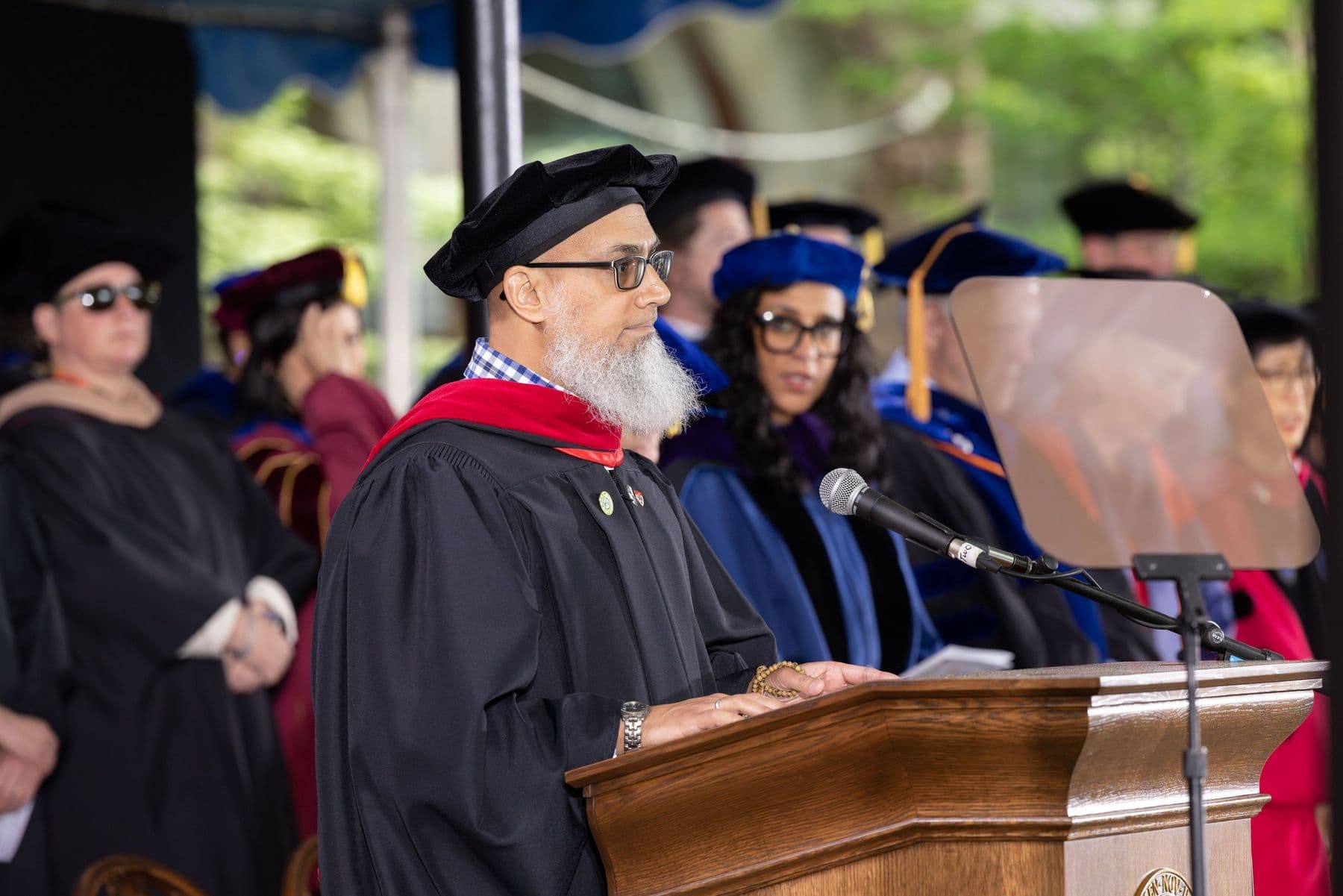
Delivers the benediction at Yale’s Baccalaureate for the Class of 2022.
- 2023
Subject of the award-winning documentary A Chaplain’s Journey. Begins co-teaching Models and Methods of College and University Chaplaincy at Yale Divinity School.
- 2024
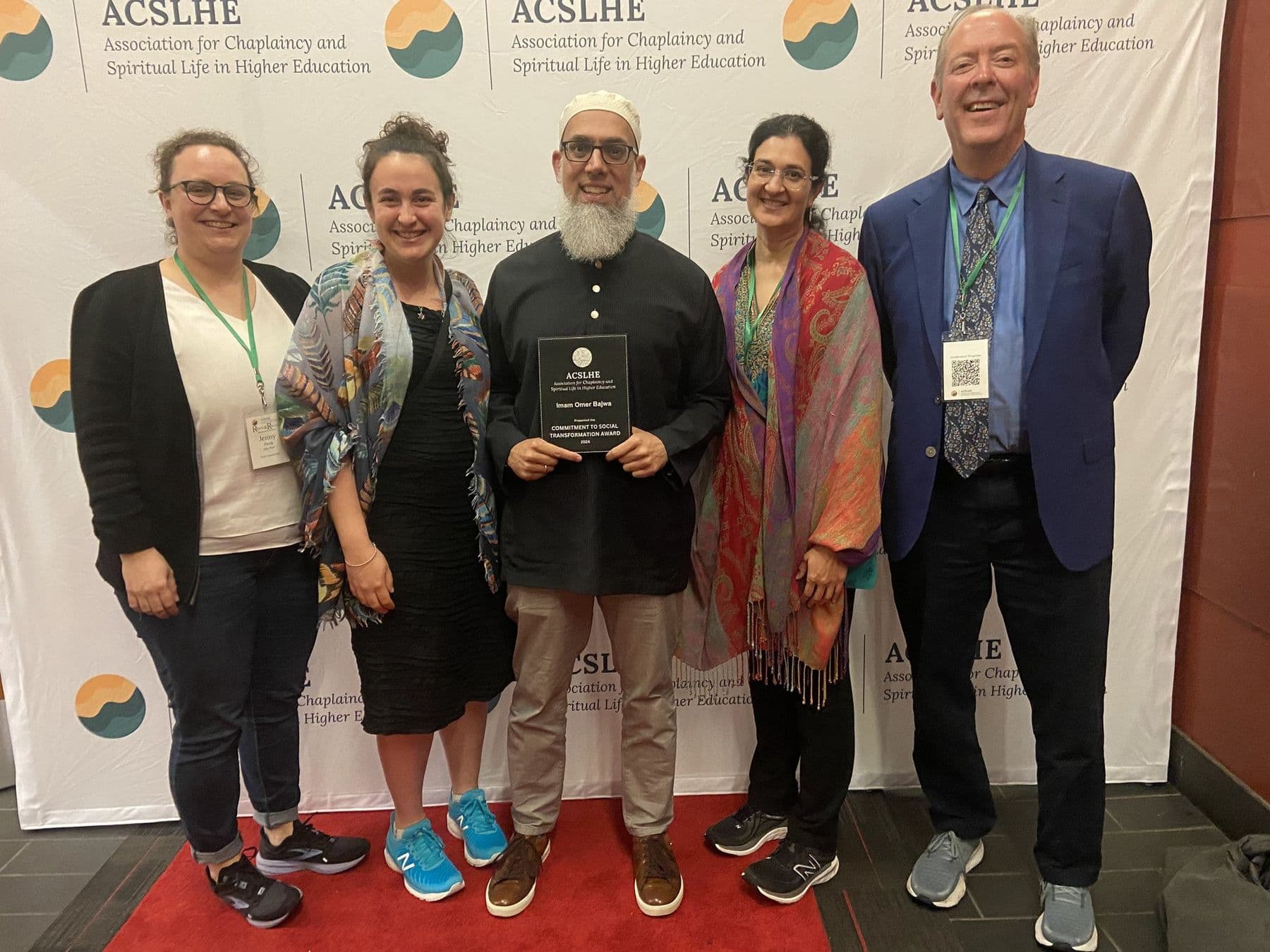
Receives the Commitment to Social Transformation Award from the Association for Chaplaincy and Spiritual Life in Higher Education. Yale appoints a second Muslim chaplain, Leenah Safi, as pastoral demands on the program grow.
Gives the invocation at the first bachelor’s degree ceremony ever held in a Connecticut prison, for the Yale Prison Education Initiative.
- 2025
Delivers the Baccalaureate benediction again, for the Class of 2025.
- 2026
Leads a joint Eid al-Adha prayer for New Haven’s mosques at Payne Whitney Gymnasium.
Appointments and boards
Co-teaches Models and Methods of College and University Chaplaincy with University Chaplain Maytal Saltiel.
Named as a board member in Dwight Hall’s 2024 account of the Yale Prison Education Initiative commencement.
Residential Fellow
Commitment to Social Transformation Award
The Chaplain’s Office photograph shows him with the 2024 plaque at the ACSLHE conference.
Founding board member and past Vice President for Education Chaplains
Chaired the 2012 national shura at Yale at which the association was launched.
Since 2020.
Advisory Board and visiting faculty
Launched the seminary’s field education program in 2022 with James Jones and Sondos Kholaki.
Editorial board, founding member
Since 2018.
Alumnus
Interim Muslim Chaplain